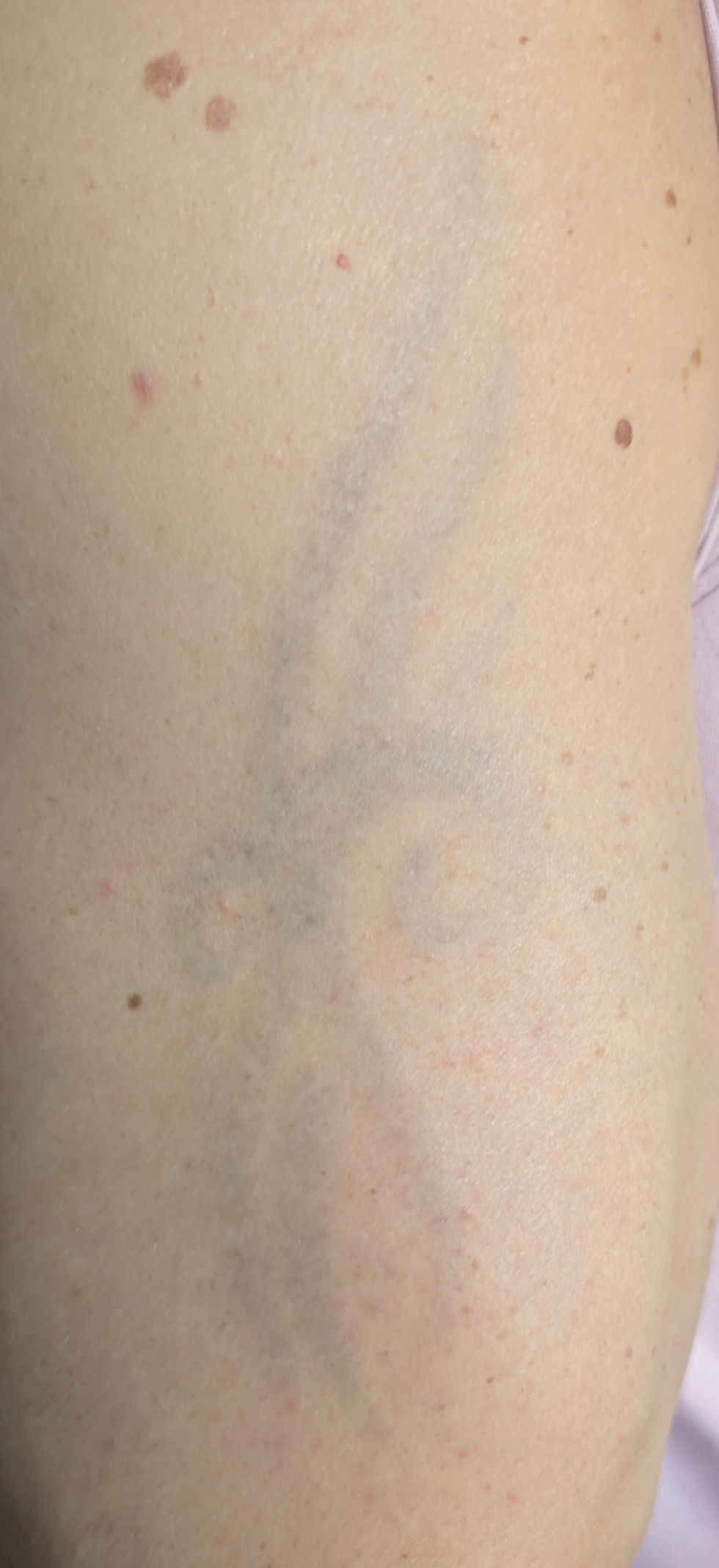
Laser Tattoo and SPMU Removal AftercareMHRA (Medical Grade) Q-Switched Nd:YAG laser, is one of the most effective methods for tattoo removal. It produces a very high power in quick pulses, the light enters the skin at a speed that is too fast (billionths of a second) to heat the surrounding tissue and directly targets the tattoo ink deep in the dermis layer of skin, fragmenting the ink into very small particles. Your body’s immune system (white blood cells) are then able to remove the ink particles into the body’s lymphatic system. Most are then expelled through the digestive system, although some can also come out in sweat and urine. You will not see these particles due to their miniscule size. Recent studies have found that ink continues to fade for up to 12 weeks or more following laser removal, therefore an interval of 10-12 weeks will be recommended between removal sessions. Some instances an 8-week interval may be permitted. Following aftercare is critical, it can have a huge impact on the outcome of your treatment. It helps your body heal better and faster and will make removal safer and more effective. If the area being treated hasn’t healed sufficiently between sessions, you will need to wait longer. If you experience the same prolonged symptom after each treatment, give yourself an extended period in between sessions to help the skin heal fully. Rushing the course of treatments won’t lead to a faster result and may increase your risk of scarring.Every individual will have a different experience, and every tattoo removal is different. It can take several weeks until the area is fully healed. • A sterile non-stick dressing may have been used on the treatment area just to allow you to get home without clothing rubbing on the area. It is advisable to remove this as soon as you get home to allow the treated area to dry and heal naturally. The area should be left open and uncovered. Ensure clothing and bedcovers are clean. • As long as the skin is unbroken cooling products such as Aloe Vera gel can be used to give relief to the sunburn type feeling of the treated area. • The area may become raised and feel hot, it can be cooled with the use of a cold compress or an ice pack (do not apply ice directly to the skin as this can cause a burn) and Aloe Vera (99% pure) is useful to reduce swelling and erythema (redness) or general discomfort. Erythema may last for several hours. It may feel tender for 48-72 hours. • A thin layer of an antiseptic cream can be used, only if your skin is broken to help protect from any infection. • Avoid water on the treated area, especially avoid soaking it for 48 hours. No baths, showers or hot tubs. When washing near the area keep the water tepid, not hot. Avoid saunas. • If spmu brow removal or tattoo treated on the face sleep with the head slightly elevated for a few days to reduce any potential swelling, if swelling occurs apply a regular cold compress and take anti-histamines. • Your skin will be fragile for at least 3 to 5 days. Do not scrub the area. Use gentle cleaning. Do not use any products on the area without first consulting your Laser Practitioner. 99% pure Aloe Vera gel will help aid recovery. • Aloe Vera gel can be used to relieve the itching which often occurs 3-5 days after treatment. • After the initial healing period, when the skin is fully healed, it’s advised to massage the area daily, for a few minutes, this will encourage blood supply to the area, encouraging fading over the coming weeks. • Avoid direct sun exposure on the area for 2 months after each procedure. Use SPF 30+ on the area when you go outside (even on an overcast day). Any subtle changes to skin colour may cause an adverse reaction, alter, or stop the next treatment altogether, as well at putting the skin in the area at risk of hypo/hyper pigmentation changes. • Avoid any strenuous physical activities/exercise for 24-48 hours after. Depending on the size of the tattoo, you may want to consider a break from physical activities for a few days longer. The more energy you conserve for your body to recover after a tattoo removal session, the more you’ll have available to help it heal. • Keep areas well moisturised and allow the blisters to dry, flake and fall off on their own. DO NOT PICK OR POP BLISTERS. This is the most common cause of infections (see below) and subsequent scarring. • Avoid irritants on the area such as Retinol, glycolic, bleaching creams, exfoliants on the area for at least 1 week prior and 2 weeks after treatment. • Keep well hydrated. Refrain from alcohol for 3-7 days (alcohol may dilate blood vessels in the treatment area), this will also give your liver chance to remove the fragmented ink particles much easier instead of your liver working to remove the alcohol from your system. • Hair colour may lighten. This happens only in the treated area. Eyebrow hairs could lighten and turn white, this will be temporary, they will grow back the normal colour, but you may wish to have an eyebrow tint once the skin has fully healed. In some instances the eyebrow hair may need to be shaved during the procedure to allow for clearer visibility. • It is best to avoid smoking for a period of several weeks before and after your procedure, as smoking constricts the capillaries and taxes the immune system, thereby slowing healing and results. · Avoid photosensitising foods (celery, leek, wild carrots, figs) 3 days before treatment if prone to photosensitivity. Avoid herbal remedies - ‘St John’s Wort’ and ‘Fever Few’ during the course. In particular for 4 weeks before removal sessions. Do not use self-tanning products on the area being treated, 3 weeks prior to laser tattoo removal. To encourage healing: Apply a very thin layer of Aquaphor Healing Ointment to the area only if your skin is taking longer tan usual to heal. It is crucial to apply it very sparingly so the skin can still breathe and the blisters can dry out naturally without trapping excess heat. SPMU – Eyebrows. It is not uncommon for the SPMU to fade/change colour during treatment, this is perfectly normaland just means on your next appointment we change the wavelength according to the next colour we are treating. Preparation for your next visit: Do not use essential oils 48 hrs prior. Do not apply any lotions or perfumes/body spray on the day of your treatment near the area. Do not take Ibuprofen or Aspirin 48 hours prior to treatments. Subsequent treatments: Inform your practitioner of any change in medications (including herbal remedies) or skin tanning, however subtle (real of fake) before your next appointment either by email or direct message, otherwise treatment may not be able to go ahead on the day. You will be required to consent to no changes mentioned, each visit. Any subtle changes to skin colour may cause an adverse reaction. What may be seen after Laser Tattoo Removal:BlisteringBlistering is normal following treatment, it is often seen in new tattoos, cover up tattoos or dense ink. If you have sensitive skin or get blisters after sunburn, your skin is likely to react the same way after a laser tattoo removal treatment. Blistering looks like a bubble on the top layer of skin either within or around the tattoo. Don’t burst your blisters. They are your body’s way of protecting your skin and stopping bacteria from coming in contact with it. Popping a blister may result in infection. Blistering from laser tattoo removal can last for 1-2 weeks. If the discomfort of a blister becomes severe, visit your registered healthcare professional/GP, and inform your Laser Practitioner as settings may need to be adjusted on your next session.Do not be alarmed, blisters heal very well and are part of the normal healing process. Blisters indicate your immune system is healing the area and beginning to remove the ink from your tattoo. It is natural for blisters to pop, and this helps the skin to heal faster in many cases. SwellingSwelling is normal after laser tattoo removal. A clean, cold compress will help with the inflammation. If your tattoo is on the upper or lower trunk, swelling will normally subside within a day or two. Resting will help, particularly with larger tattoos. Avoiding vigorous, repetitive movements. For swelling on the arms, keep the area elevated above your heart to help with circulation. For tattoos on the legs, it’s important to keep the feet up to reduce swelling and aid circulation. Depending on the size and location of your tattoo, swelling will subside between 3 and 5 days after a treatment. RednessYour skin may become red directly after treatments. This symptom can last for up to 72 hours. Redness in or around the tattooed area indicates that your top layer of skin is still very sensitive.You may also have minimal to moderate pinpoint bleeding following a treatment. Redness of skin is sometimes accompanied by blisters. Some people experience redness of skin longer than others, but if the redness does not get progressively better within 7-10 days, contact your clinic or a Doctor. ItchinessItchiness is common, but not everyone experiences it. Itchiness can begin as soon as a few hours after a laser tattoo removal treatment and can last up to 6 weeks. If you experience severe itchiness, you can take an over-the-counter antihistamine, as directed, to help alleviate some discomfort but never scratch or disturb the affected area or it could lead to scarring. Crusting, dryness, and scabbingCrusting or dryness is very common once the blisters have subsided, and scabbing starts to form. Sometimes the affected area looks a lot worse than it is, because crusting can sometimes make the tattoo look even darker. Don’t worry – once the scabbing has healed the affected area will appear lighter. There’s not much you can do but leave the skin alone and make sure it isn’t disturbed or irritated. Never pick or remove the skin from a scab as this could cause unnecessary scarring. Crusting will last for as long as your skin needs to protect the area, so be patient with this step. InfectionsWhile scabbing, crusting and dryness are perfectly natural, it is important to know the difference between these normal symptoms and an infection. An infected area has increasing redness and pain, and can have pus-like discharge as well. If you have an infection, you may notice honey coloured discharge from a deep lesion within the skin. This lesion won’t get better without medical attention. If you suspect you have an infection, contact your medical professional immediately who may prescribe an antibiotic cream. Inform the laser technician, your next treatment may need to be delayed by a minimum of six weeks in addition to the usual time gap.